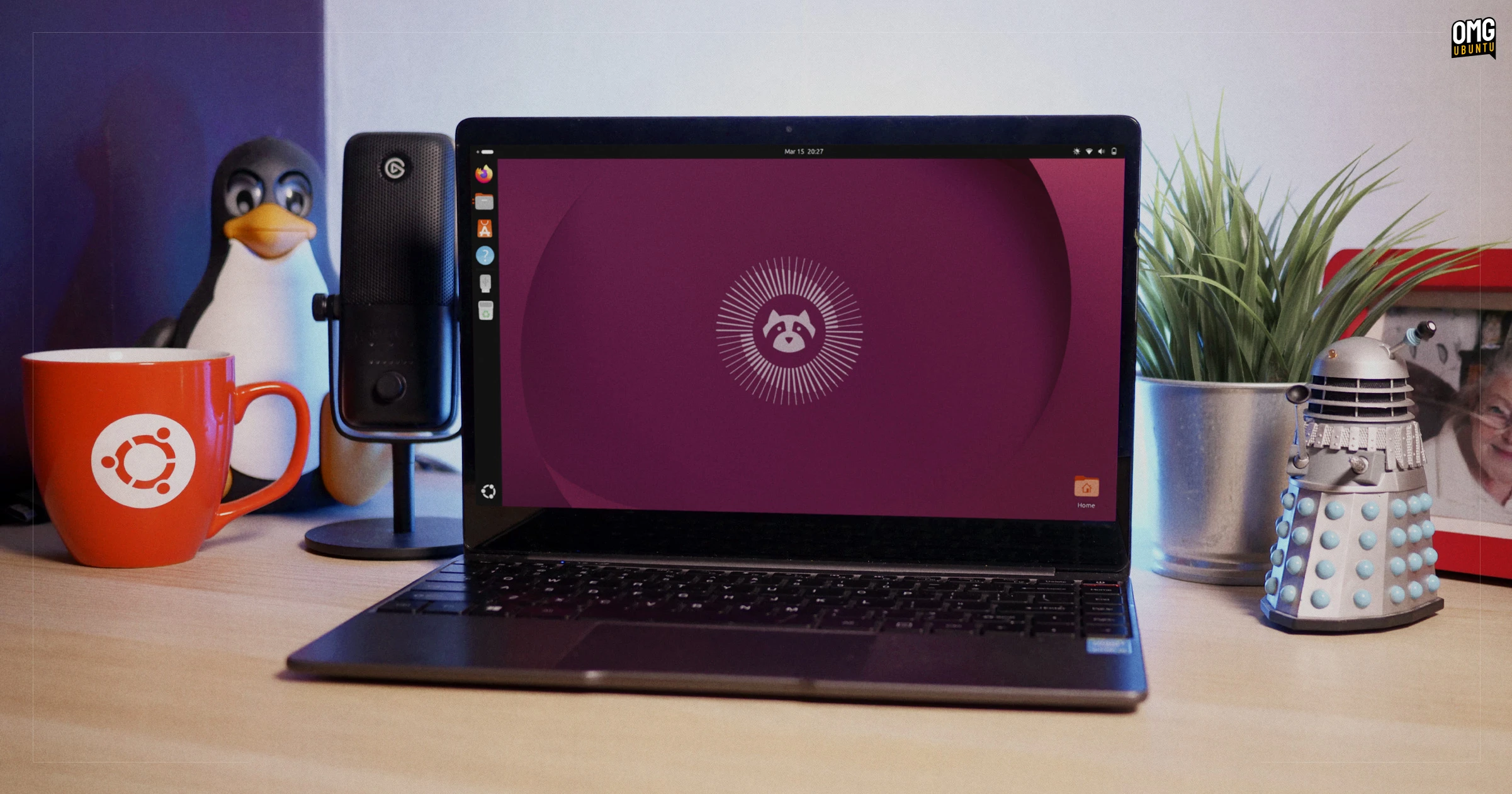
26 Changes in Ubuntu 26.04 LTS
1. No more X11/Xorg desktop session
Ubuntu 26.04 LTS no longer includes an X11/Xorg desktop session as GNOME removed support for running on the legacy display server earlier this year (so Ubuntu can’t offer it, even if it wanted to).
The impact of this won’t be felt. Ubuntu has used Wayland by default since 2021 (it became default for NVIDIA users in 2024 to allow for testing ahead of this LTS). Plus, most software that does require X11 will happily run on a Wayland desktop using XWayland.
And contrary to Linux YouTubers who talk in clickbait, XWayland is included by default. Ubuntu not supporting X11 does not directly affect other flavours/desktops, some of which (like Lubuntu) continue to use it, and xserver packages are available in the Ubuntu repositories for you to install – you just can’t run the GNOME desktop on it.
2. Dracut is now the boot init
On new installs, Ubuntu now uses Dracut to generate the initial RAM filesystem (initramfs) during boot. You are unlikely to notice anything meaningfully different with this change, but under-the-hood it offers a predictable, future-proof, and event-driven boot process.
3. Improved TPM-backed disk encryption
If you “upgrade” by way of a clean install, the enhanced OS installer experience has a couple of new options, the more notable of which is support for installing Ubuntu using TPM‑backed full‑disk encryption (FDE).
This is compatible with select TPM 2 chips and requires Secure Boot enabled. It’s not perfect; TPM/FDE uses a kernel snap that may not include certain kernel modules necessary for certain hardware features. Plus, the feature doesn’t support all TPM chips, though the OS installer will let you know if your TPM could work but can’t, and explain why. If it can’t use it at all, it won’t surface an option (greyed out or otherwise).
The setup process underscores the importance of generating and saving a recovery key, and new recovery keys can be generated from the Security Center app. Plus, the Firmware Updater tool notifies you if an available update would affect TPM state.
Ubuntu 26.04 LTS still supports disk-encryption using a LUKS passphrase so if you don’t have TPM, you don’t need to forgo disk-level security. The Ubuntu OS installer has improved its handling of dual-boot setups too, notably when a BitLocker-protected Windows system is present. You can install Ubuntu with encryption alongside Windows via the Advanced Options section.
4. Rust-based sudo & coreutils
Ubuntu has spent the past few releases replacing some key system components with versions written in Rust, a memory-safe programming language. sudo is now provided by sudo-rs (the command itself has not changed) and password feedback has been enabled by default. You’ll see asterisks every time you enter your sudo password in the terminal – hit tab to temporarily mask it.
sudo-rs is not 100% compatible with the original sudo implementation, but unless you run handwritten scripts or rely on niche tools, chances are this won’t be an issue. The old version of sudo is available to install from the repos (package name sudo-ws).
In addition to sudo, most of the distro’s core command-line tools (like ls, grep, and cat) are Rust-based versions from the rust-coreutils package, but cp, mv, and rm are provided by GNU coreutils due to ongoing issues with the Rust versions.
5. Various theme/design changes
Ubuntu 26.04 LTS looks similar enough to 24.04 at first glance, but on closer inspection you’ll notice that a fair bit has changed. The new folder icons adopt a vivid new look that inherits the desktop accent colour (orange by default). They pop against light and dark backgrounds and use a subtle engraved effect for folder emblems.
Other visual upgrades include:
- Optically resized icons in the Yaru theme.
- New icons for the LibreOffice suite, the Snapshot webcam app, and the trash can.
- A new animated, less blurry loading spinner.
- A darker login screen background and tweaked modal dialogs with consistent radius values.
- A new boot animation featuring the Raccoon mascot.
- Subtle GNOME Shell animation tweaks (menus and notifications scale/spring rather than fade).
- Media controller accessible directly on the Lock Screen.
6. Seven new default apps
Ubuntu 26.04 LTS delivers a refreshed set of default apps:
- Papers: Replaces Evince as the default document viewer. Rebuilt with Rust and GTK4/libadwaita, adding ink annotation, markup tools, freeform text boxes, and digital signatures.
- Loupe: Supplants Eye of GNOME. Uses Glycin for improved image rendering, supports multi-touch gestures, and offers basic editing tools.
- Ptyxis: Ubuntu’s new default terminal. Features a slick tab overview, profile switching, container support, and a headerbar that turns red if sudo is active.
- Resources: Assumes the role of system monitor with engaging big graphs and extensive hardware info.
- Showtime: Replaces Totem as the default video player (extended install only). Distraction-free UI with on-canvas controls.
- Security Center: A one-stop hub to enable Ubuntu Pro, manage encryption keys, and opt-in for snap app prompting.
- Sysprof: A developer tool for capturing performance data on software and system processes.
Note: If you upgrade in-place from 24.04, the new apps are installed alongside the old ones.
7. File manager feature-fest
Nautilus has gained up to 5x faster directory loading and 10x faster thumbnail generation (prioritising files in view). There’s a new thumbnailer powered by glycin. A dashed border is shown around icons when cut, and hidden dot files render with a slight transparency.
Other Nautilus changes include:
- Improved search UI with pill-shaped filter buttons and a calendar widget.
- File properties can open as a floating window.
Ctrl + .shortcut opens the current folder in the terminal.- Long drive/mount names are shortened in the middle.
- Smoother browsing of phone files via incremental loading.
- Sidebar reorganized: bookmarks moved lower, Trash moved up. "Other Locations" is removed; internal drives are now shown in the sidebar by default.
8. Notification groups deal with the deluge
Notifications are now grouped by source in the message tray. When an app sends multiple notifications, they stack together into a collapsed group. Expand the stack with a click to view or dismiss them individually, or dismiss the whole stack at once.
9. App Center lets you manage Deb software
In 26.04 LTS, the Manage section of the App Center has gained a filter to see installed Deb software individually or alongside snaps. The App Center can also update some Deb apps, though you’ll still need the Software Updater for the rest.
10. Software Updater indicator
The Software Updater will now show an indicator icon in the panel if there are pending updates, preventing the update window from randomly stealing focus. You can hide the icon via a simple right-click toggle if preferred.
11. Ubuntu Dock differences
The Ubuntu Dock is no longer transparent, switching to an opaque background to match the top panel (transparency can be re-enabled via terminal). Background effects behind hovered icons match the dock edge radius, and right-click menus now link directly to the app's details in the App Center.
12. Desktop Icons NG improvements
You can now resize desktop icons using Ctrl + +/-, select multiple icons with Shift + arrow keys, and use Home/End keys to navigate. The right-click context menu styling is now consistent with the rest of the desktop.
13. Snap & web search in Overview
Searching in the GNOME Overview now pulls Snap app results alongside installed apps. There’s also a web search shortcut—type your query and click the Firefox result to launch a pre-filled search. Both can be disabled in Settings.
14. APT got a glow-up
The apt command-line tool now features improved output formatting with colours, columns, and padding. App removals are listed last in red. It includes a new package solver and commands like apt why, apt why-not, history-info, and history-list.
15. Do Not Disturb moved
The Do Not Disturb toggle has been relocated to the Quick Settings menu in the top-right corner.
16. HDR, VRR & smarter scaling
Out-of-the-box support for advanced display features has arrived:
- HDR: Available in Settings > Displays for compatible monitors (app support on Linux remains limited).
- Variable Refresh Rate (VRR): Enabled for everyone where supported.
- Fractional Scaling: Now uses exact quotients for sharper rendering, offering values like 133% and 166%.
- Legacy Scaling: A toggle is included to control whether legacy X11 apps are scaled to match the rest of the system.
17. Remote desktop buffs
Remote sessions now persist between service restarts. You can connect to a headless system, add a virtual monitor, and use touch input forwarding. Streaming is now offloaded to the GPU via Vulkan and VA-API for lower latency, and NVIDIA users get explicit sync support.
18. Wellbeing controls
A new Wellbeing panel in Settings brings screen time tracking to Ubuntu. You can view daily usage, set limits (with an optional greyscale screen tint), and configure break reminders. Parental controls can be added via the malcontent-gui package.
19. Software & Updates app dropped
The legacy Software & Updates tool is no longer included on new installs, meaning the "Additional Drivers" shortcut is gone at launch. Managing PPAs and specific update behaviors requires installing the tool manually from the repos.
20. Startup Applications also removed
The old GUI tool for configuring autostart apps has been replaced by autostart toggles directly within Settings > Applications. To run custom scripts on login, you must now use an autostart folder and custom text file.
21. Firmware split
The massive linux-firmware package has been split into 18 vendor-specific sub-packages. This saves massive amounts of bandwidth during system updates, as only the specific firmware affecting your hardware needs to be downloaded.
22. Accessibility buffs
The accessibility menu at the login screen has moved to the lower-right corner. A new "reduce motion" setting is available to dial down UI animations and effects.
23. Power charging limits
Compatible laptops now have a battery health charging option in Settings > Power, capping the charge at 80% to preserve lithium battery lifespans. A new power mode indicator also shows in the top bar when the Balanced profile isn't active.
24. Control Ubuntu telemetry collection
Telemetry collection is now more visible. You can view and toggle system profiling directly from Settings > Privacy & Security > Telemetry.
25. AMD & NVIDIA AI stacks
NVIDIA CUDA and AMD ROCm—popular GPU computing stacks for AI and machine-learning—are now available directly in the Ubuntu repositories, installable easily via apt.
26. Linux 7.0 & Mesa 26.0.x
Ubuntu 26.04 runs on Linux kernel 7.0. The linux-lowlatency package has been retired in favor of lowlatency-kernel, a userspace tuning package. Graphics are handled by Mesa 26.0.3 open-source drivers, with NVIDIA’s proprietary driver at 590.x by default.
Comments
0 comments
No comments yet
Start the discussion with a thoughtful note.